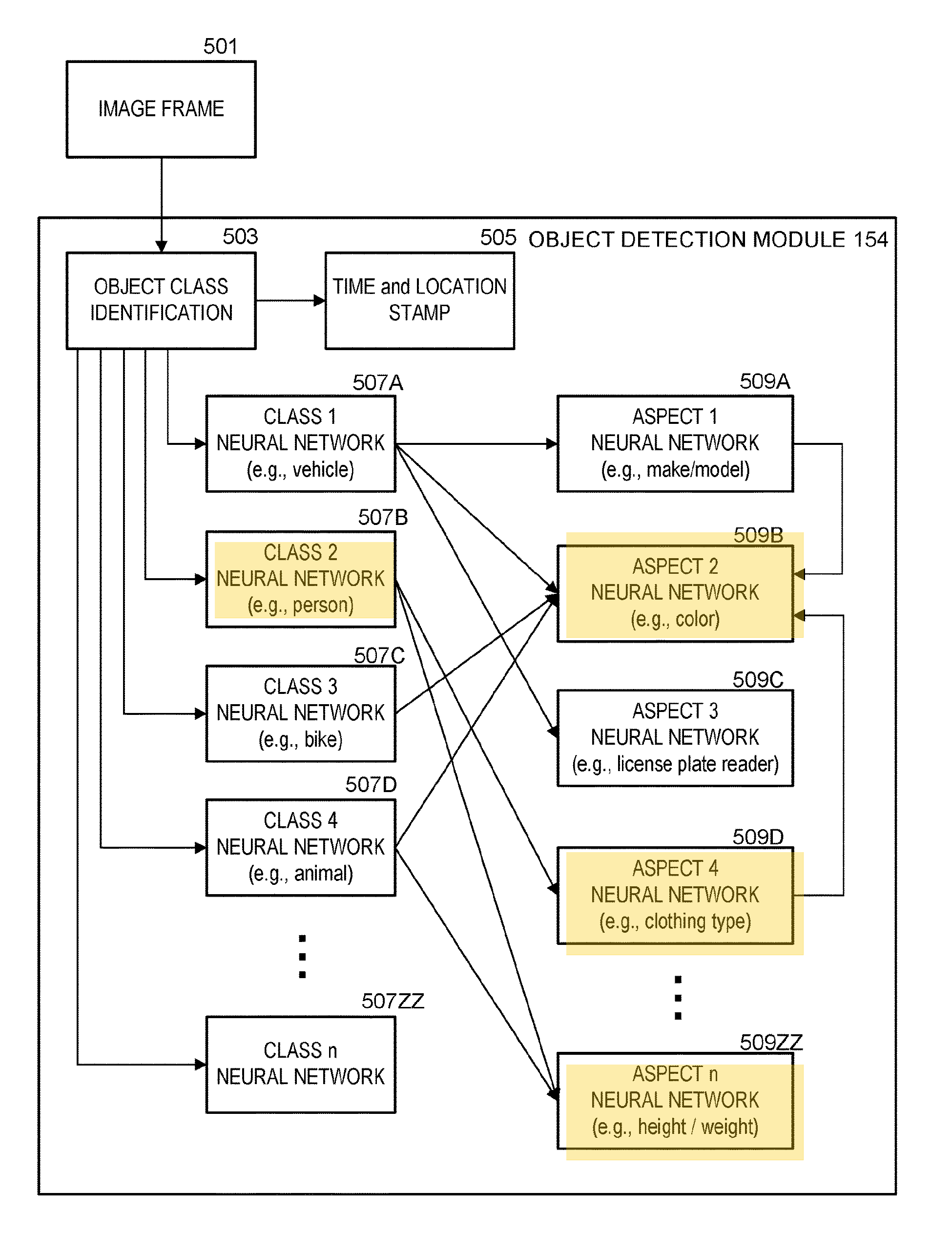
Page 10 / Figure 5A
Objects and attributes
This diagram shows the system analyzing objects, including people, and assigning attributes that can be stored and searched.
Patent
Flock cameras are sold as license plate readers. Flock's own patent describes something bigger: video analysis that identifies people and objects, classifies attributes like "male, female, race," clothing, height and weight, stores video with time and location, and lets an operator search those records by attribute.
A patent is not proof that every feature is active in Casa Grande today. But the people searches in the released logs run against exactly this kind of capability, and Flock has said its plate cameras can become video cameras through a cloud software update.
US Patent 11,416,545 B1
"Male, female, race." Clothing. "Height and weight."
Those are the patent's own examples of the attributes the system assigns to a person it sees, so that an operator can later search for "a male wearing blue jeans within this geographic zone."
Five excerpts
Why the patent matters
Companies patent technology they are using, building, or preparing to sell. Treat these excerpts as product direction, not speculation. With AI moving quickly, this technology may already be in use elsewhere or close to deployment.
Source: Flock Q2 2025 product launch, video-enabled LPR camerasPatent excerpts are used here for public-interest commentary and source attribution. The full patent record is linked so readers can review the source.
Page 10 / Figure 5A
This diagram shows the system analyzing objects, including people, and assigning attributes that can be stored and searched.
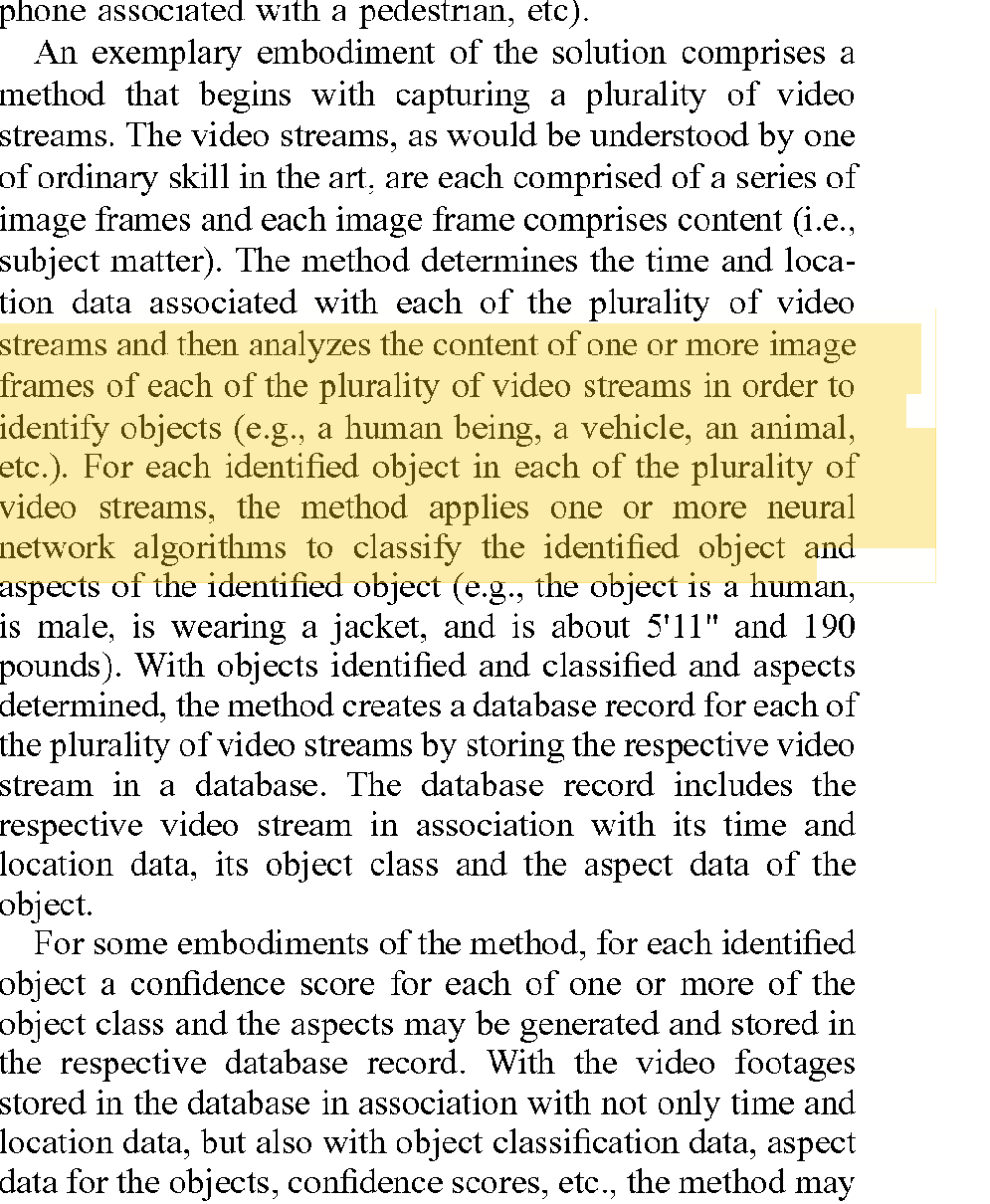
Page 16
The patent describes analyzing video to identify people and objects, not just vehicles.
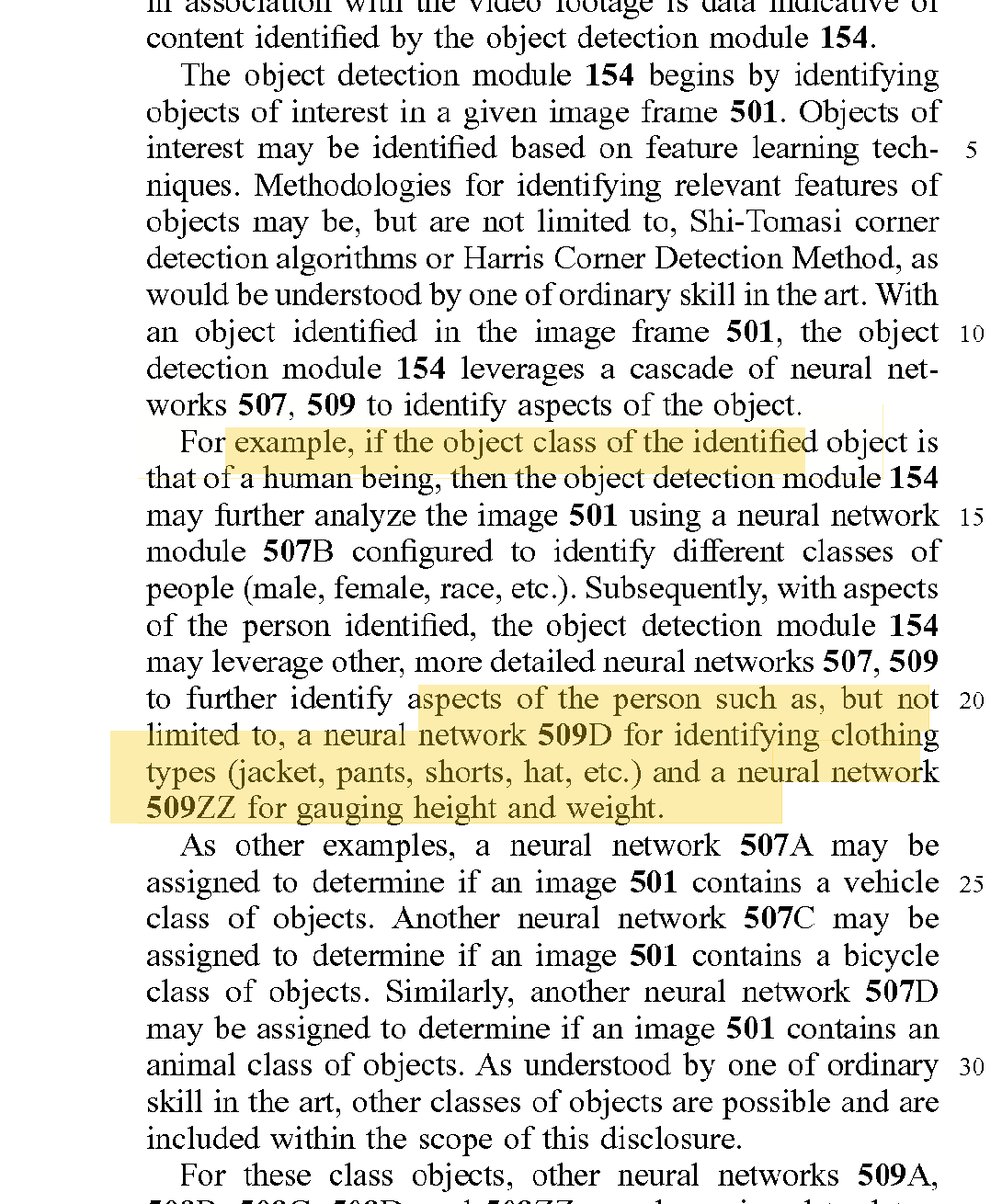
Page 25
The patent describes classifying people by sex, race, clothing, and physical characteristics.
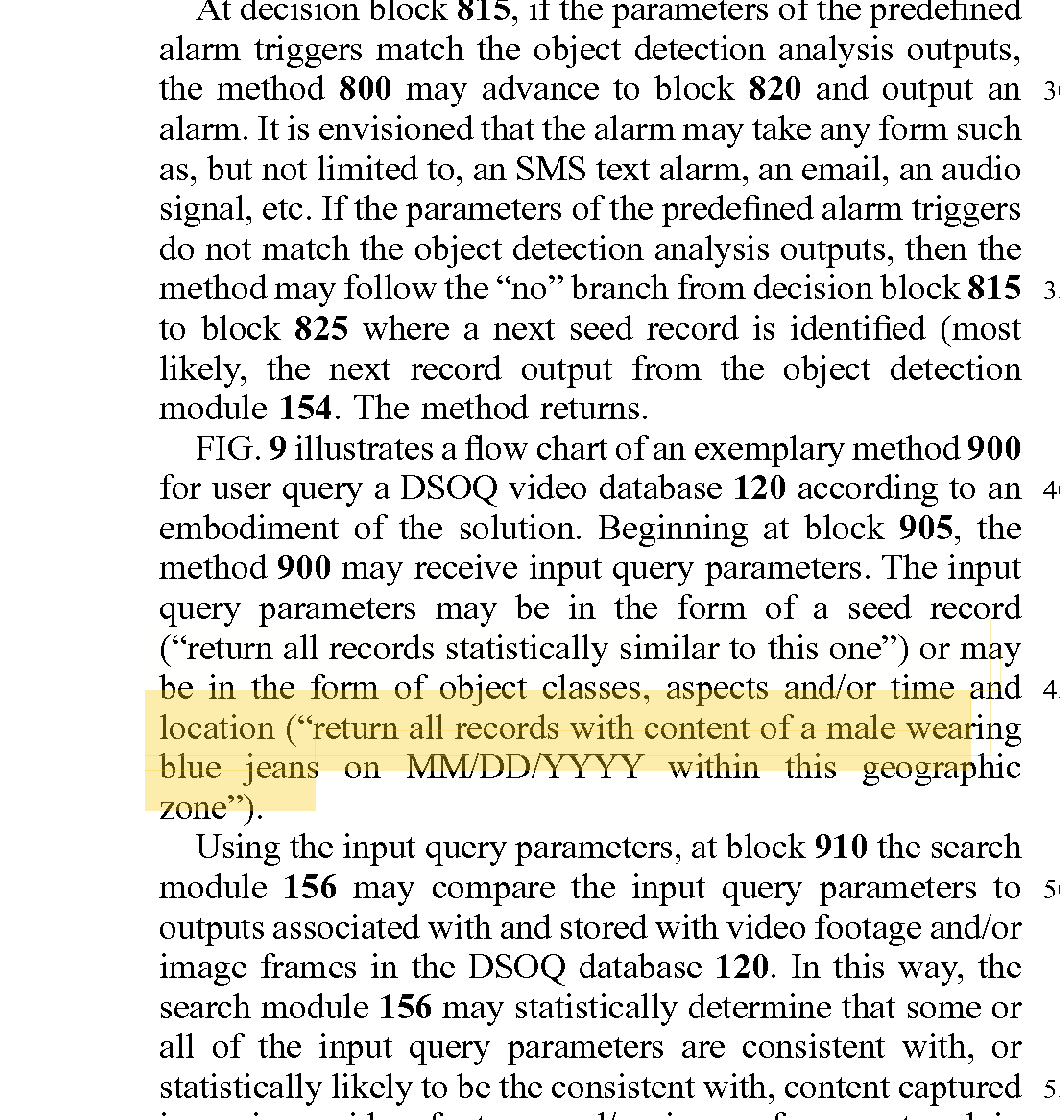
Page 27
This shows the system can search video for specific types of people based on attributes and location.
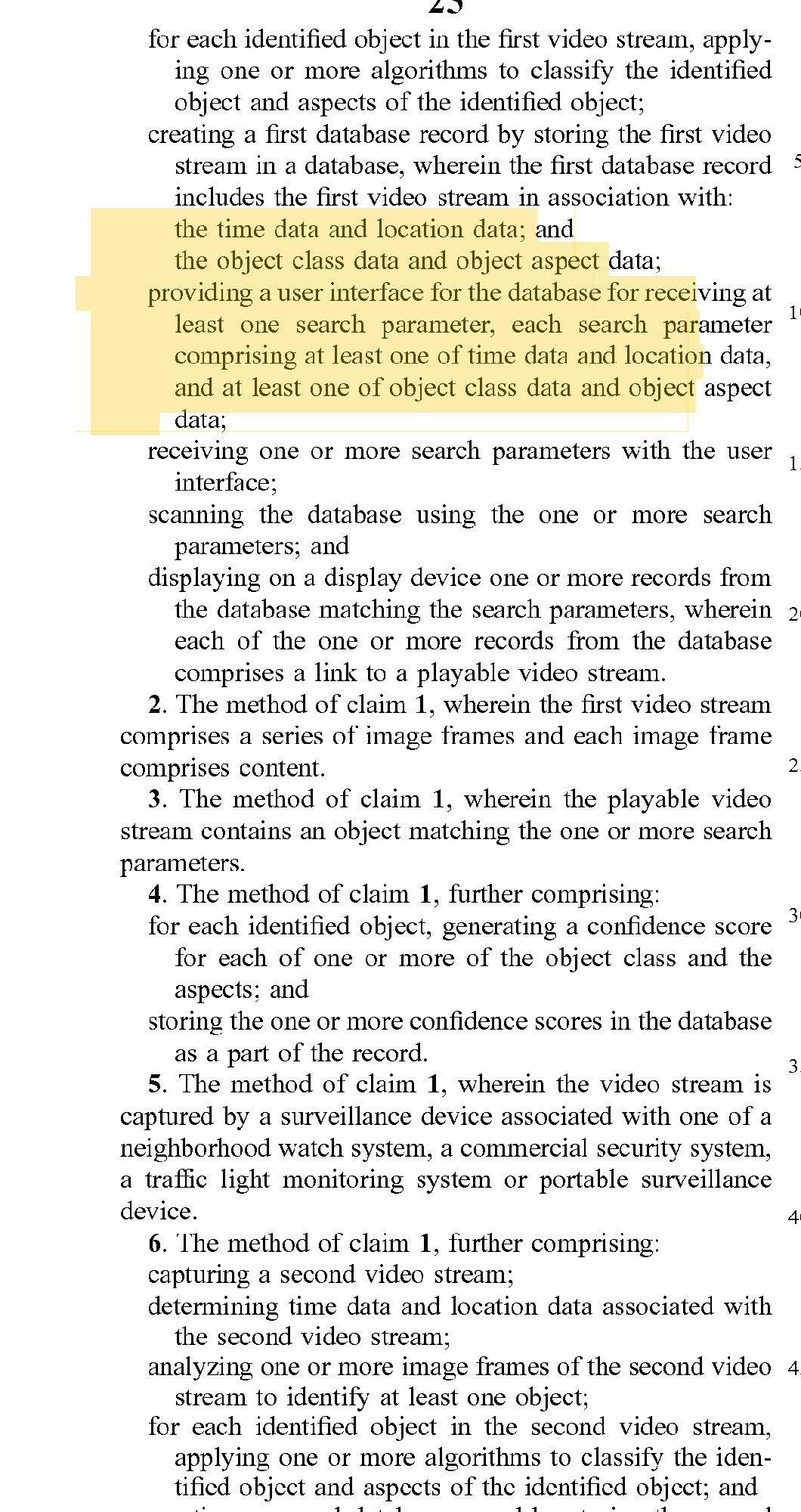
Page 28
The system stores and allows searching of video based on attributes, not just time and location.
The patent describes sorting people by race. The logs show officers trying it.
Next
Searches for people
22
Searches for a "male" or "female" in four months. Every search was allowed.
See the searches →
Microphones
31
The 31 gunshot-detection devices are microphones. A microphone cannot detect a gunshot without recording the sound around it, and Flock plans to have them listen for human distress.
Read about the microphones →
Schools
May 4
The agreement never defines "authorized users," never bans facial recognition or AI analytics, and never requires telling parents.
Read the school agreement →
Bottom line
Casa Grande residents deserve to know exactly what the system can collect, who can search it, and what rules stop abuse.